
Historic Kessler Cemetery
The last remnant of the Kessler Settlement and the Church of the Holy Savior, Jesus Christ, and the resting place of the German Catholic pioneers who made a home on the Missouri frontier.
Rooted in the German immigrant experience
The rolling landscapes of Easton and Hurlingen in Buchanan County, Missouri, are deeply rooted in the mid-19th-century German immigrant experience. Sebastian and Scholastika Kessler came to the United States in 1831. They settled first in Ohio and moved to Buchanan County in 1839, to land that became known as the Kessler Settlement. In 1844 families such as the Wiedmaiers and the Sielas arrived from Germany and settled nearby.
This community of “intelligent and prosperous farmers” built their lives around faith and agriculture, and the settlement grew toward the nearby town of Easton and the village of Hurlingen. The spiritual center later moved to St. Joseph Church in Easton and Seven Dolors in Hurlingen, but the original settlement was the bedrock of the region. The area remains a testament to these pioneer families, the weavers, farmers and tradespeople who made the Missouri frontier a lasting home.
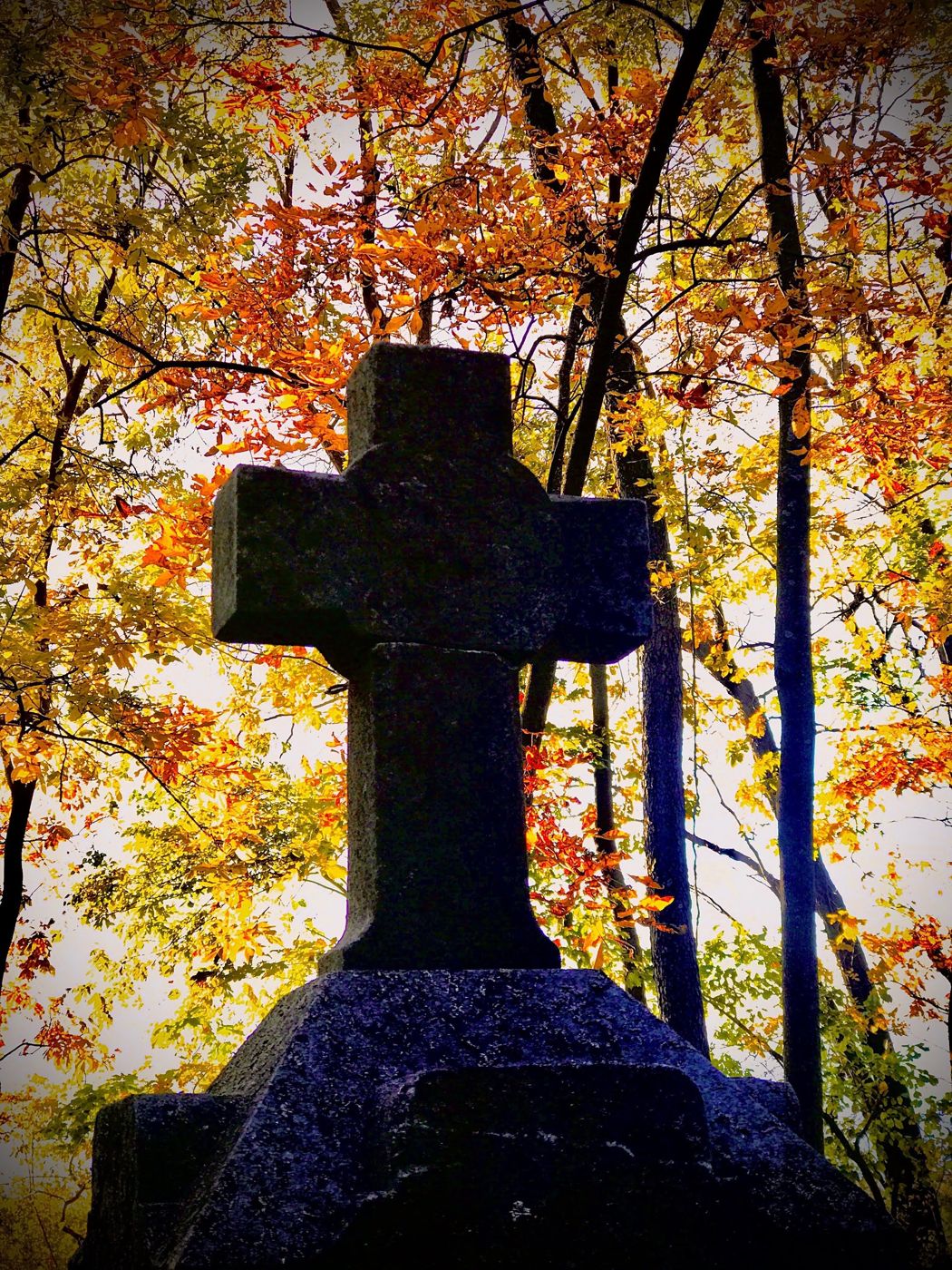
Hallowed ground, nearly lost
Kessler Cemetery, established in 1847, is the last physical trace of the Church of the Holy Savior, Jesus Christ. It began on five acres of private land that Joseph and Maria Louisa Kessler donated to the Diocese of St. Louis for a Catholic church and burial ground. The first recorded burial was Joseph Wiedmaier in 1849. The cemetery stayed in use for 74 years, until the burial of Joseph M. Gerstner in 1923. It is a memorial to at least seven Civil War veterans, including Wunibald Kessler and Jacob Wiedmaier, who both lost their lives in the conflict.
After a new Catholic cemetery opened in Easton in 1896, many families moved their loved ones there. The original access road was eventually abandoned, which left the site landlocked and nearly forgotten. After decades of being reclaimed by nature, Boy Scouts cleared and restored the grounds in 2002, but age and vandalism returned the cemetery to ruins. A grassroots movement of descendants, sparked by Tim Wiedmaier’s book on the cemetery, began around 2017 and raised the money for a professional restoration of the headstones in 2019 so that the legacy of the Kessler Settlement pioneers will be kept for future generations.
“As long as people don’t forget, it will survive!”The preservation volunteers
Nearly two centuries on this land
From Germany to Ohio
Sebastian and Scholastika Kessler immigrate to the United States and settle first in Ohio.
The Kesslers reach Buchanan County
The family settles the tract that becomes the Kessler Settlement. Their two-year-old son Johann dies that year. His stone at nearby Bowen Cemetery is the oldest there.
First baptisms at the site
Jesuit missionaries perform the first recorded baptisms at the settlement, five years before the church is built.
Arrival on the ship Iowa
On June 10, the Wiedmaier and Siela families arrive in America together and soon join the settlement.
Sebastian Kessler Sr. dies
His son Joseph and daughter-in-law Maria Louisa take over the family estate.
Deed to the Church
On September 22, Joseph and Maria Louisa Kessler deed five acres to Peter Richard Kenrick of St. Louis for one dollar, “for the site of a Roman Catholic Church.”
First burial
Joseph Wiedmaier, a weaver from Germany, is buried on October 2.
Easton is platted
The new town to the west becomes the community’s center. A post office named Easton opens in 1855.
A sacrifice for the Union
Wunibald Kessler dies on December 10, aged 25. His German-language stone says he died as a sacrifice for the Union.
Families move their dead to Easton
The Catholic Tribune reports that the McAlarney, Fisher and Waller families are moving their dead to the new cemetery.
Last burial
Joseph M. Gerstner is the last person buried in the cemetery.
The Scouts restore the grounds
Local Boy Scouts and St. Joseph parishioners clear and restore the cemetery and install a shadow box for Jacob Wiedmaier’s military records. Over time, age and vandalism return it to ruins.
A grassroots movement
After Tim Wiedmaier writes and prints his own book on the Old Kessler Cemetery, cousins who had never met him reach out to help, and a descendants’ movement to save the cemetery begins.
Stones restored and rededicated
Professional restorers repair and reset about 40 headstones, and the cemetery is rededicated in November.
Discover the story
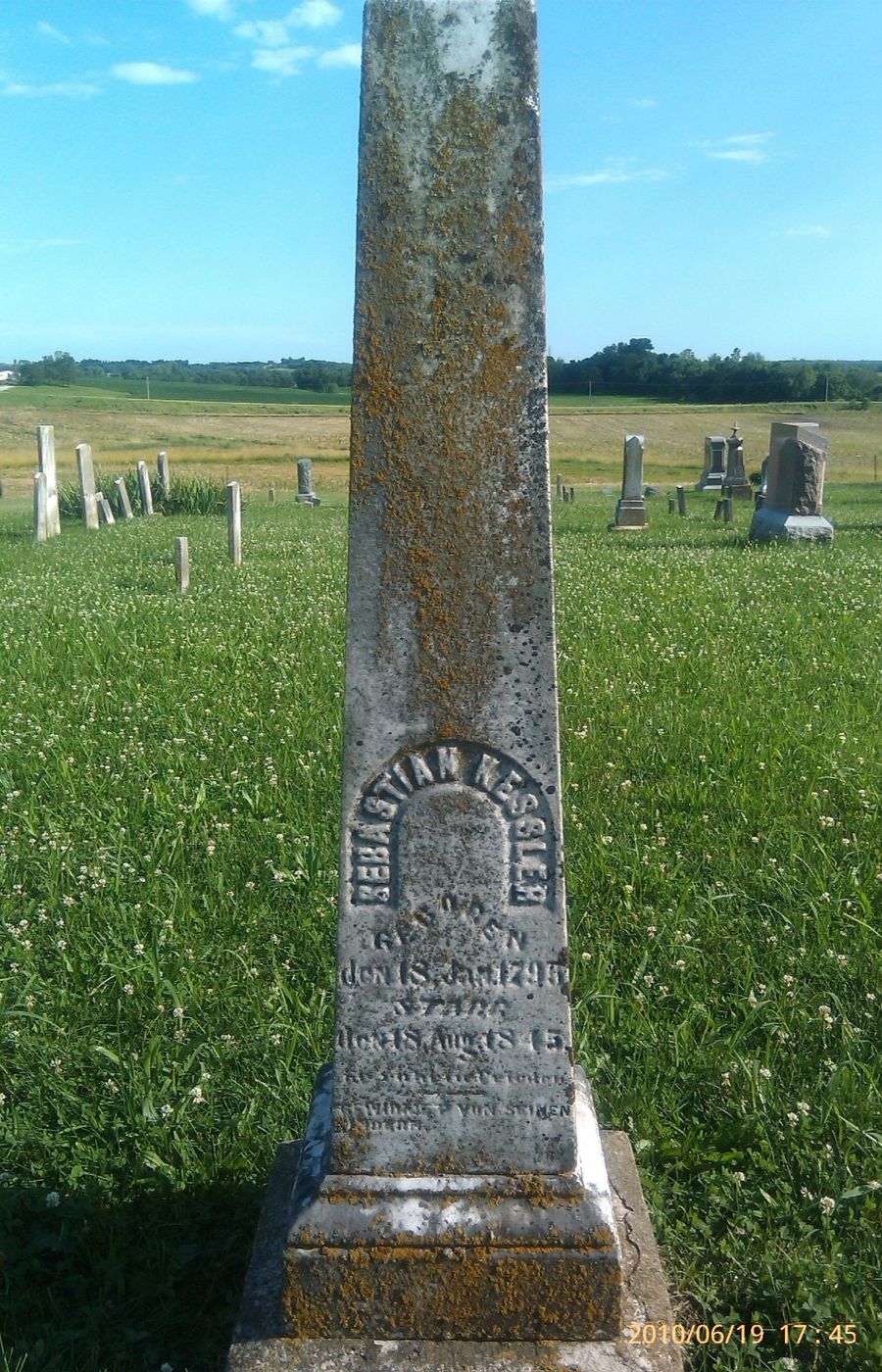
The Kessler Settlement
The family who gave the land and the immigrant community that grew around it.
Read more →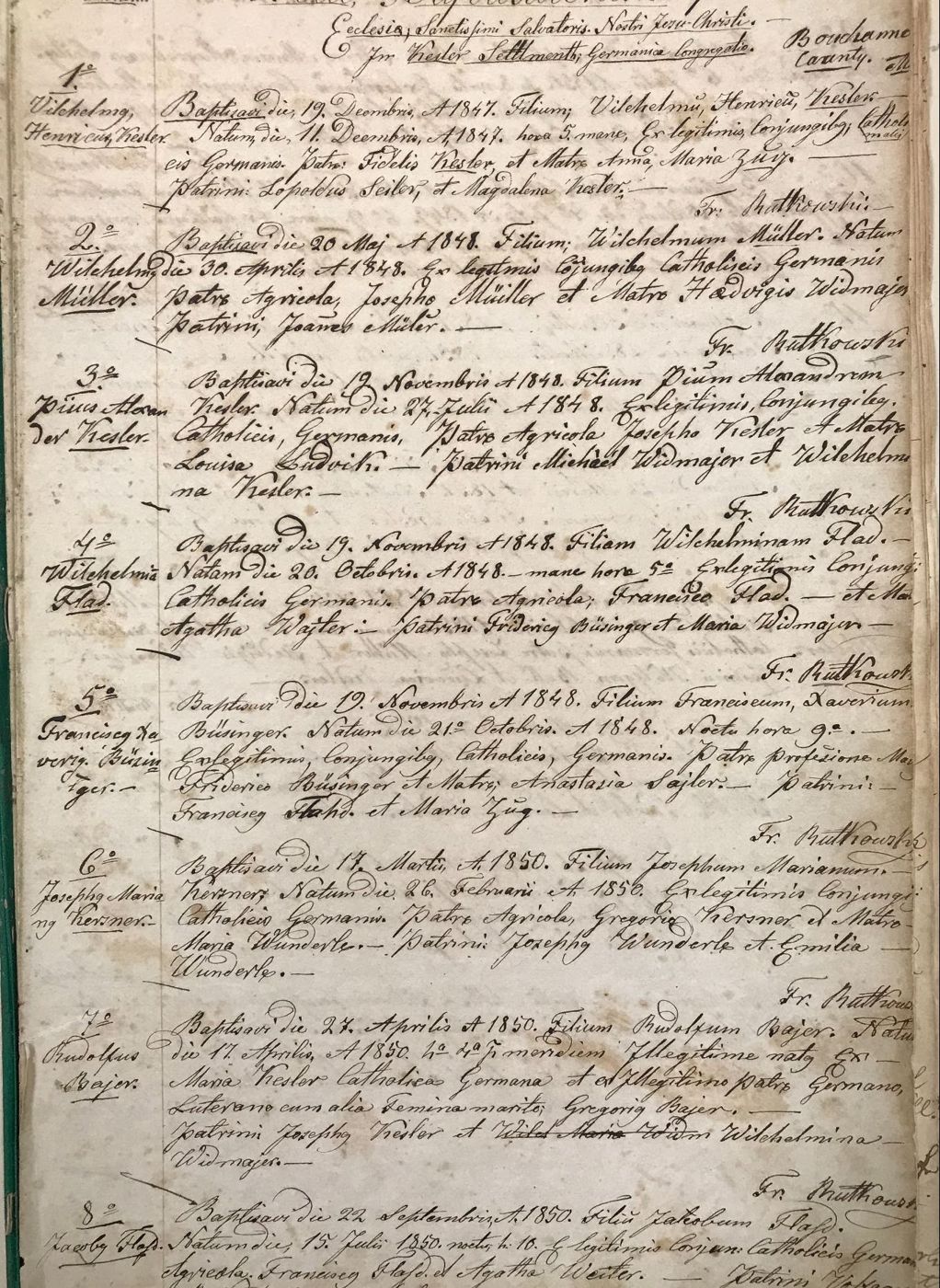
Church of the Holy Savior
The frontier log church at the heart of the German congregation.
Read more →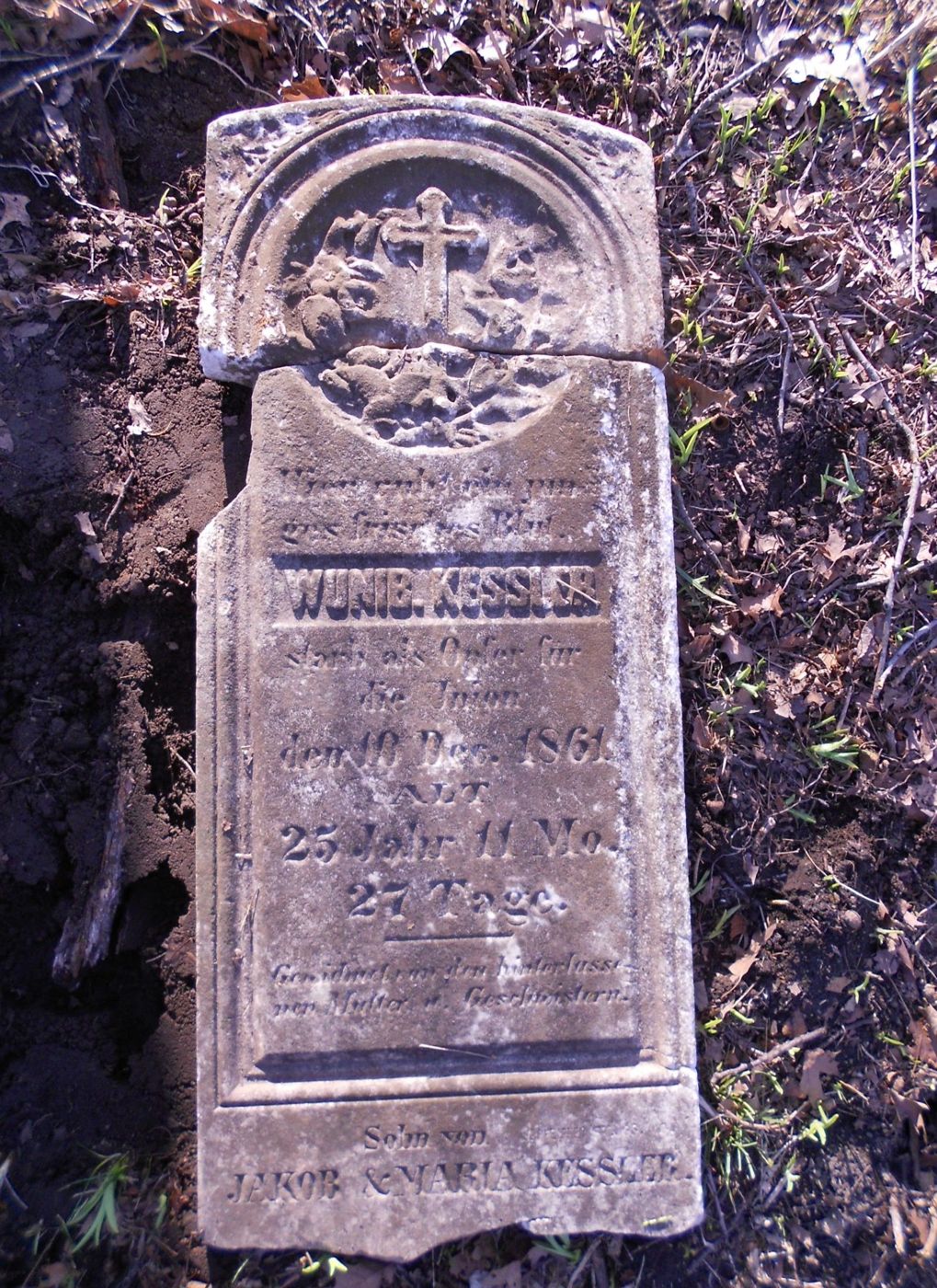
Pioneer Families
The Kesslers, Wiedmaiers, Gerstners, Fishers, Sielas and the other families buried here.
Read more →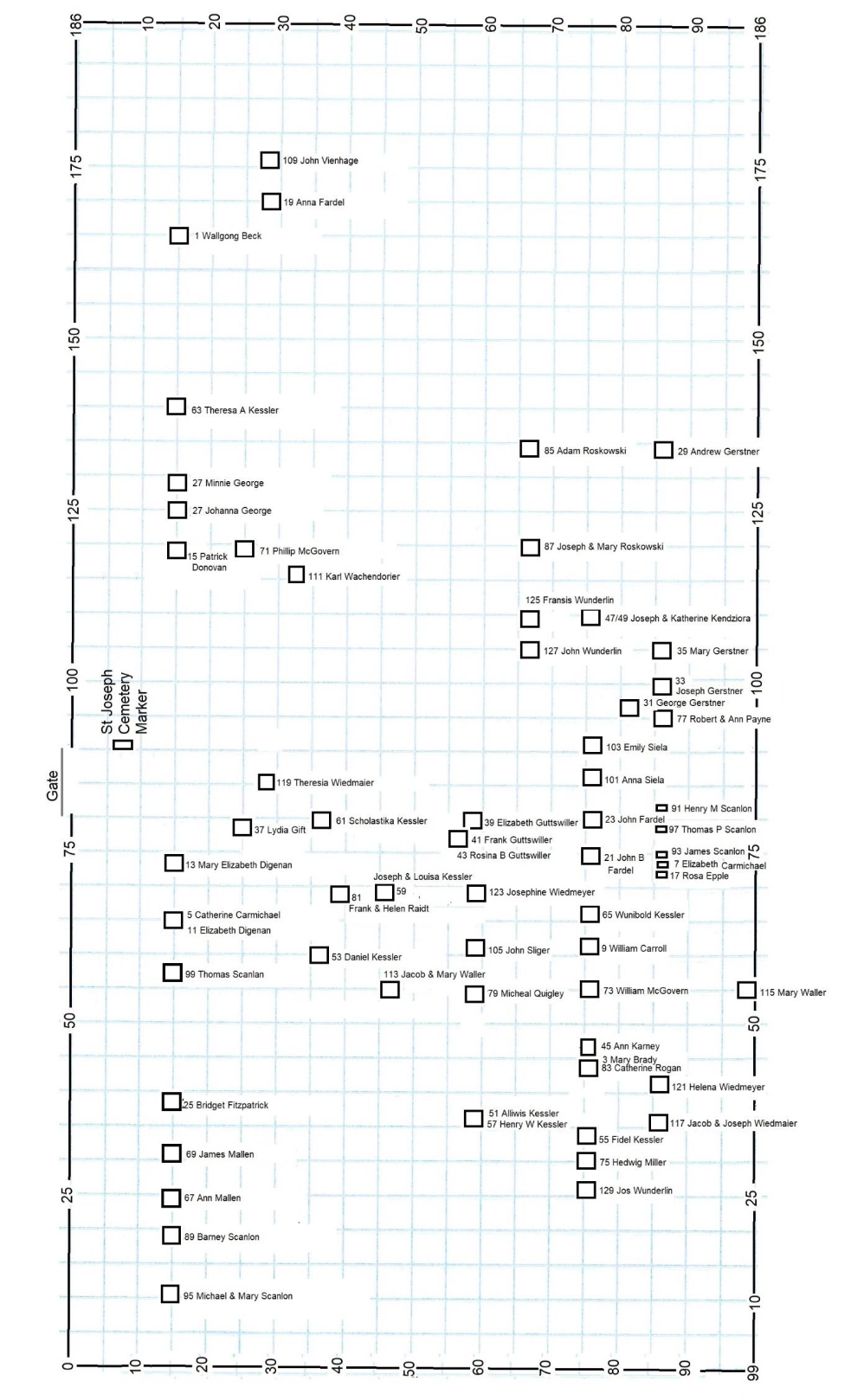
Every marker accounted for
Volunteers have mapped the known graves in the cemetery and matched stones to names from church and family records. Some graves are unmarked or hidden underground, so the work of finding and remembering them continues.
About the CemeteryHelp preserve this sacred ground
The cemetery survives because volunteers care for it. Join a workday, follow the group or make a donation.